


KONI FSD Shocks: Frequency-Selective Damping Explained
KONI FSD stands for Frequency Selective Damping. The technology uses hydraulic valving to address the familiar tension between controlling body movement and allowing a more compliant response to road disturbances. It operates mechanically, without driver adjustment or electronic commands. Understanding that distinction is more helpful than treating FSD as a promise of a perfect ride in every condition.
What frequency-selective valving responds to
Body roll and pitch generally involve lower-frequency suspension motion, while many smaller road disturbances produce higher-frequency inputs. FSD valving is designed to respond differently to those characteristics, providing body control while allowing a more compliant response to appropriate higher-frequency movement. Frequency is not simply another word for impact size, and real road events can combine several kinds of motion. The result remains dependent on the vehicle and its suspension.
Mechanical adaptation, not an electronic mode
FSD does not need the driver to select a comfort or sport setting for its frequency-sensitive action. Its response comes from internal hydraulic operation rather than sensors commanding an electronic valve. That also means it should not be assumed to integrate with or replace a vehicle’s factory electronic damping system without application-specific confirmation. The FSD name describes a damping approach, not universal compatibility with every suspension architecture.
Understand the FSD Gold name
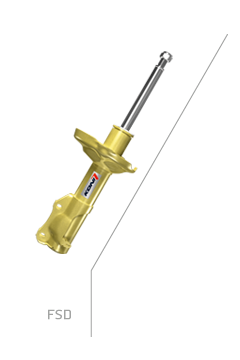
FSD Gold is associated with KONI’s frequency-selective products, but color and historical naming are not enough to identify the correct replacement. Passenger-car and motorhome applications have different requirements, and a technology used across vehicle categories does not make the parts interchangeable. Select by the current application and part number. References to vehicles such as the Fiat 500 Abarth, Lamborghini Gallardo or Class A motorhomes are not blanket fitment approval.
Lowered vehicles require a specific decision
Lowering can reduce available suspension travel and change where a damper operates within its stroke. Spring rate and bump-stop engagement also affect ride quality. A moderate drop is not automatically compatible with every FSD application, and no universal lowering allowance should be assumed. Check KONI’s guidance for the exact damper and spring combination. If the vehicle is already harsh because it frequently reaches its bump stops, changing damping alone may not solve the underlying travel problem.
Set expectations around the whole suspension
Frequency-selective damping cannot eliminate every compromise created by tire construction, spring choice, worn bushings or poor alignment. Inspect related components before judging the result of a shock replacement. FSD also does not raise payload ratings or provide air-spring-style leveling support. Define the concern you want to address—body movement, rough-road discomfort or worn-damper behavior—then compare an approved FSD option with other suitable dampers for the same vehicle and use.
Applications and parts
Evolution from Lamborghini Gallardo to Premium Automobiles
Photos and diagrams
Related reading
More information
Frequently asked questions
Does FSD require electronics?
No. Its frequency-selective action is produced by mechanical hydraulic valving rather than an electronic controller.
Can I use FSD with lowering springs?
Only where the exact combination is approved. Reduced travel and altered spring rates can affect operation and ride quality.
Are FSD shocks manually adjustable?
Do not assume they are. The frequency-selective function operates automatically; confirm any separate adjustment features by part number.


